
Mr. Park, 32 years old, who graduated from a four-year university in Seoul and works at a public enterprise, recently strongly suspected he has attention-deficit hyperactivity disorder (ADHD). Mr. Park said, “I’ve never been diagnosed at a hospital or received any related feedback during my childhood, so I hadn’t considered it until now,” but added, “I recently saw an online ad claiming to help people ‘escape ADHD,’ and most of the adult ADHD symptoms listed there applied to me.”
The ad Mr. Park saw read: ‘You get scolded every time for the same mistake at work. You’re always late in the morning and take a taxi to work. Your impulse purchases are so severe you have no money. Your head is filled with so many thoughts you can’t focus. You’re scolded daily for having a messy room… This is not your fault. It’s because of ADHD.’
Mr. Park said, “I often checked my phone mid-task and purchased items from social media ads even when I didn’t need them,” and added, “I used to blame myself, but I suddenly wondered if I might have ADHD.”
Mr. Park is not alone. Cases of self-identifying with ADHD, once stereotyped as a condition for ‘scatterbrained and impulsive children,’ have surged, particularly among adults. Over recent years, broadcasts revealing that adults can also have ADHD—including ‘quiet ADHD,’ which lacks overt hyperactivity—have lowered societal stigma. Consequently, terms like ‘fashion ADHD’ and ‘ADHD complainants’ emerged online, mocking those who self-diagnose via unverified online quizzes without proper evaluation.
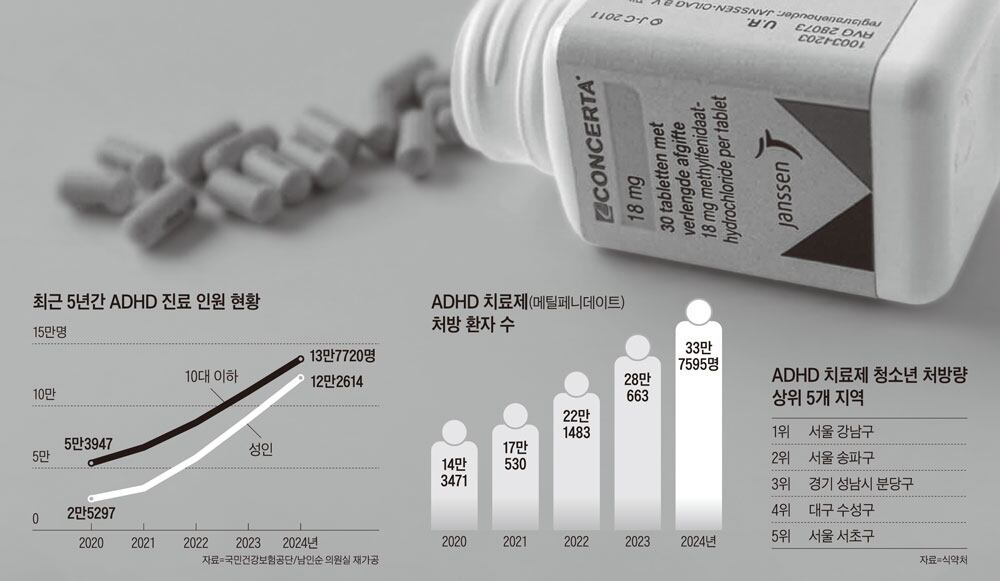
Domestic ADHD patients have sharply increased annually, with adult cases rising notably. Adult ADHD patients grew from 25,297 in 2020 to 122,614 last year, surpassing 100,000 for the first time. In comparison, minors under 19 increased from 53,947 to 137,720—a 2.6-fold rise—while adult cases surged 4.9-fold.
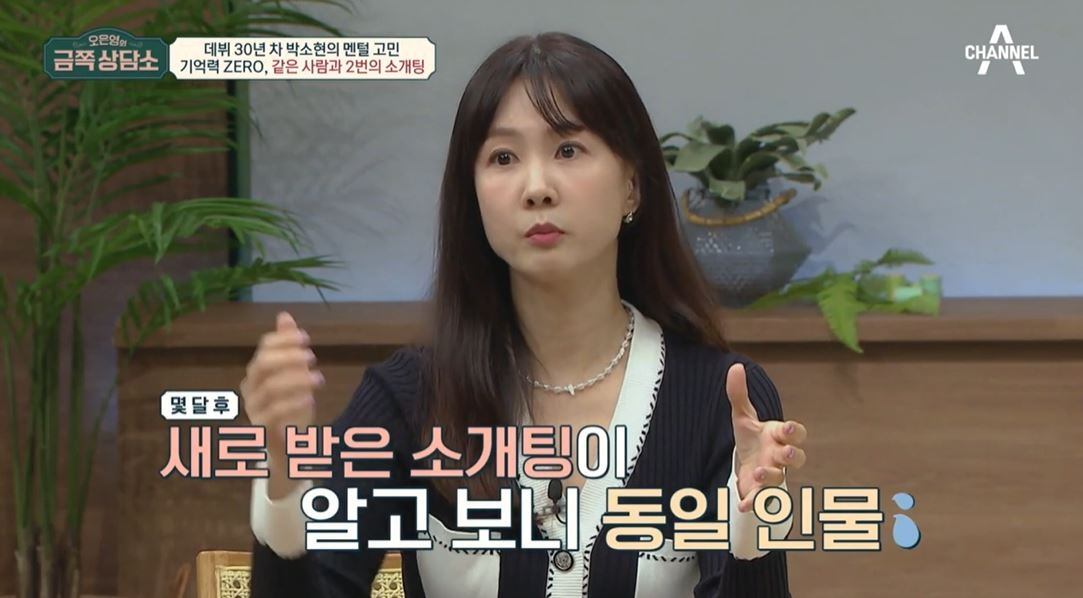
Experts attribute this trend to heightened social awareness of adult ADHD. Celebrities’ public confessions, such as broadcaster Park So-hyun, who said, “I struggled with severe forgetfulness, such as not remembering someone I went on a blind date with and meeting them twice,” and actress Hwang Bo-ra, who mentioned she has never used sunglasses for more than a week because she keeps losing them, lowered psychological barriers. This mirrors how comedian Lee Kyung-kyu and Kim Gu-ra’s past disclosures about panic disorder raised public interest.
Director Na hae-ran of Na hae-ran Mental Health Medicine Clinic said, “Previously, people might have thought, ‘That’s just how I am,’ but now many proactively seek help after recognizing issues before doctors diagnose them,” and added, “While increased diagnoses are a factor, it could also reflect a rise in actual ADHD cases.” ADHD, viewed as a neurodevelopmental issue, often improves with brain development or societal adaptation. However, instant-answer societies, personalized online ecosystems, and short-form content prioritizing fleeting pleasure reduce the need for patience or impulse control. Director Na hae-ran noted, “Sociocultural environments that could help improve ADHD are diminishing.”
Rising ADHD awareness has led many to self-diagnose via online surveys without proper evaluation. Ms. Jo, 20 years old, living in a dormitory at a private university in Seoul, said, “Earlier this year, I cautiously mentioned my roommate’s messy room, and she initially apologized but later claimed, ‘I have ADHD and can’t help it,’ stopping all efforts to clean.” She added, “She self-diagnosed using an online quiz.”
Mr. Kim, 51 years old, who runs a café in Gangnam, Seoul, faced a similar situation. After pointing out a mid-20s part-timer’s tardiness, the employee said, “I actually have ADHD,” then abruptly quit without giving time to find a replacement. Mr. Kim said, “It felt like they used ADHD as an excuse, which was shocking.” This explains online mockery of ‘fashion ADHD’ and ‘ADHD complainants.’
Professor Kim Eun-young, 43 years old, of Seoul National University’s Mental Health Center, said, “Smartphone addiction, excessive media exposure, and gaming definitely reduce attention spans, so many without ADHD still experience concentration issues,” and added, “Without understanding the root cause, people assume they have ADHD based solely on symptoms.”
Consequently, genuine patients feel their condition is being ‘stolen.’ Mr. A, a 20-year-old job seeker diagnosed with ADHD in his late teens and still on medication, said, “I struggle to overcome it while wondering how long I’ll need medication, but recently feel ashamed as others misuse ADHD as a shield for mistakes or to appear special.”
ADHD medications, misconstrued as ‘concentration boosters,’ have caused shortages, depriving those in need. Concerta (methylphenidate), a common ADHD drug, faced supply shortages since April last year. Methylphenidate prescriptions rose from 143,471 in 2020 to 337,595 last year—a 2.4-fold increase.
Supplies resumed in the second half of this year, but demand remains high, risking future shortages. Concerta, a stronger stimulant than caffeine, improves focus and regulates impulsivity in ADHD patients. However, its effects led to misconceptions as a ‘study aid.’ The Ministry of Food and Drug Safety found that regions with high educational fervor, such as Gangnam, Seocho, and Songpa in Seoul, had high ADHD medication prescriptions among teenagers, suggesting misuse for artificial focus.
Professor Kim said, “ADHD medication is not a supplement for everyone with poor concentration,” and warned, “Misuse can cause cardiovascular side effects like palpitations, hypertension, and tremors, or anxiety, irritability, restlessness, and insomnia due to overstimulation.”
Attention and concentration issues often accompany mental illnesses or arise from insomnia, overwork, or chronic stress, mimicking ADHD. Relying solely on ADHD medication without addressing root causes like sleep deprivation or burnout can worsen chronic issues.

Professor Kim added, “During exam periods, students often claim ADHD due to reduced focus,” and advised, “If suspected, first check for common overlooked factors like stress or sleep deprivation. If needed, consult a specialist for proper diagnosis.”
Post a Comment for "South Korea’s ADHD surge: Genuine cases or excuse?"