
It was once known as the 'old man's friend' because it was seen as a quick and painless way to die—and more than a hundred years later, pneumonia is still a leading cause of death in the elderly.
It was named on the death certificate of two Hollywood stars this year; Val Kilmer, who died aged 65 in April, and Diane Keaton, 79, who died in October.
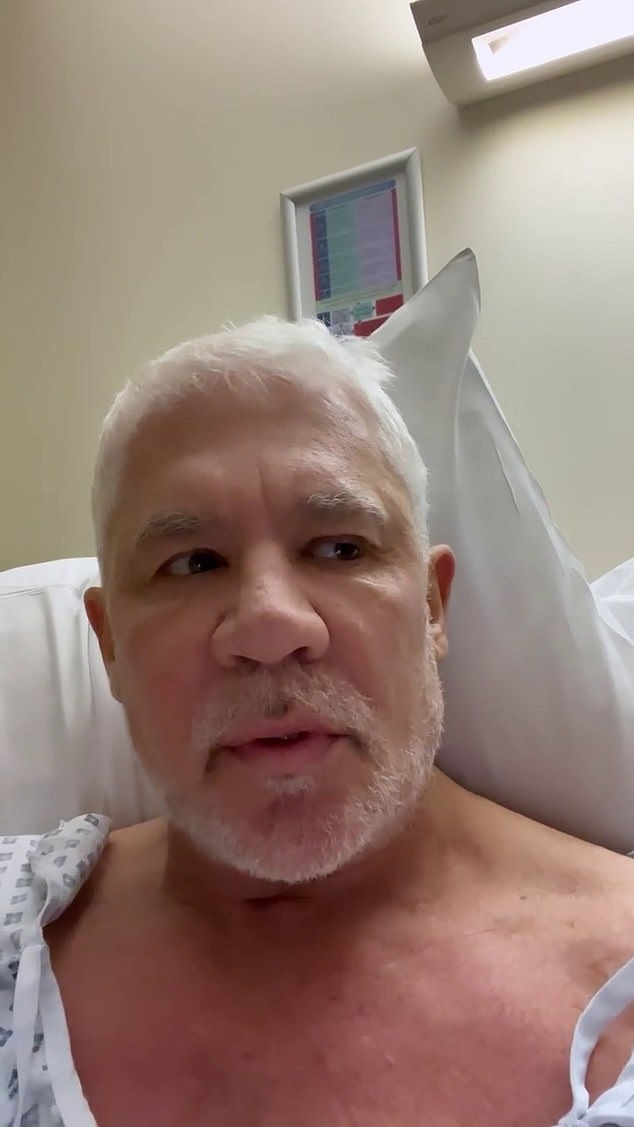
And earlier this week, Ibiza lothario Wayne Lineker, 63, revealed that he too almost became a casualty of the crippling respiratory condition.
He told fans that he had been hospitalised after a virus he picked up in Dubai left him fighting for his life in hospital, adding that his recovery could take months.
Now experts have revealed why there seems to be more cases of pneumonia than ever before, and what triggers the debilitating condition.
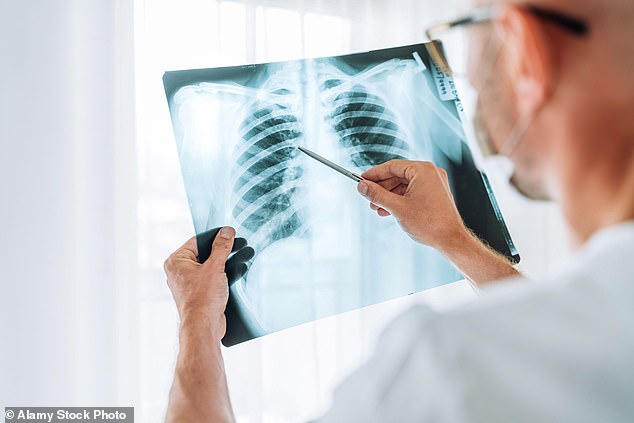
Pneumonia is a type of chest infection that affects the tiny air sacs in the lungs, leaving sufferers struggling to breathe, and in some extreme cases, coughing up blood or fighting for their life on a ventilator.
ONS figures reveal that in 2024 there were 23,061 deaths in England and Wales where influenza (flu) and pneumonia, which have been banded together by statisticians since 2020, were listed as the underlying cause.
Professor Paul Hunter from Norwich Medical School told the Daily Mail that there's a reason why the two illnesses are regarded as coming hand-in-hand.
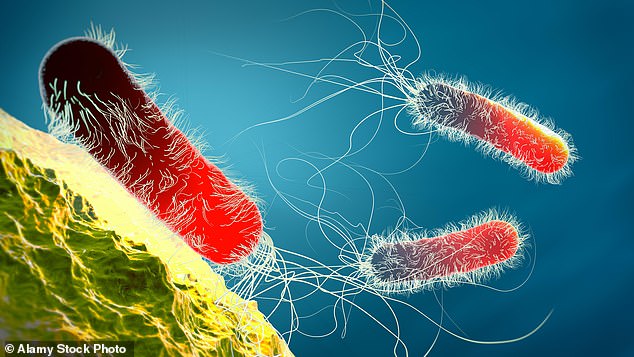
He said: 'There are multiple types of pneumonia, but pneumococcal pneumonia is caused by a bacterial infection which commonly follows influenza.
'How many people die from influenza? It's not that big a number. What is the big number is the people who die from the pneumonia that they develop while they're recovering from the influenza.'
This, Professor Hunter explained, is because the flu virus attacks the lining of the upper respiratory tract, damaging the cilia, the microscopic hairs which line our airways.
These tiny hairs are responsible for 'wafting away' bacteria and harmful particles from settling deep inside the delicate air pockets in our lungs, called alveoli.
'They make you cough [the particles] up rather than letting them continue all the way down into the lungs,' he said.
'The influenza damages those cells so that they can't actually protect the lungs from bacteria and other things, leaving them more vulnerable.'
When the alveoli become infected, they fill with fluid, blood or pus, making it impossible for vital oxygen to be transferred into the bloodstream.
Although pneumonia earned its morbid moniker as the 'old man's best friend' in the early 1900s, it still has the potential to take the lives of the most vulnerable members of society, especially if they are in poor health.
And because Britain has an ageing population—and is currently at the mercy of a new wave of 'mutant flu'—contracting pneumonia poses as serious a risk as ever.
Dr Simon Clarke, Associate Professor in Cellular Microbiology at University of Reading, told the Daily Mail: 'We're living longer in a frail state, and that means we are possibly more likely to contract pneumonia.
'Older people have weaker immune systems, and they're also less likely to be active, so they don't breathe in and out as vigorously as younger people would.
'Inactivity can increase your risk of contracting pneumonia. We're covered in bacteria and we're exposed to viruses all the time.
'If you're unable to fight them off, if your body is less effective at essentially blowing these bugs away, then then you'll be at a higher risk.'
Other risk factors, he added, include being ventilated for a long time, for instance during an operation, with many people finding they develop a chest infection after being intubated.
But there are actually myriad ways that pneumonia can develop other than the well-known reasons of bacterial or viral infection.
Professor Paul Hunter explained: 'Pneumonia is basically an infection of the lungs.
'It can be caused by tuberculosis or a near drowning experience.
'There's also inhalation pneumonia where you're sick and then you inhale your vomit into your mouth and into your lungs.
'People who have HIV or seriously compromised immune systems are more likely to contract Pneumocystis pneumonia, which is caused by a fungal infection.'
With so many different causes of pneumonia, it becomes clear that it's not a standalone disease, and Dr Clarke said that this is a common misconception.
'Pneumonia is a catch-all phrase for a set of symptoms relating to a serious chest infection, rather than a singular infection caused by one bug,' he said.
'It is when you have inflammation of the lower airways, and it causes a compromised ability to breathe.'
It doesn't take long for wheezing, coughing and being unable to take in lungfuls of air to start causing havoc in the body.
Without enough oxygen, vital organs struggle to function at a basic level, but pneumonia can cause other complications—with one of the most dangerous being sepsis.
This is when the blood becomes infected and turns toxic, effectively poisoning you from the inside out, leading to multiple organ failure and death.
'It's not the case for everyone who contracts pneumonia,' said Dr Clarke. 'But sepsis can arise from pneumonia.
'This is because there is so much bacteria or viral infection in the lungs that it enters the bloodstream.'
Another common misconception is that pneumonia always kills, and that everyone who has it needs to be hospitalised.
Today there are more cures and treatments for pneumonia than ever before, and not all of them are administered on an inpatient ward.
Dr Clarke explained: 'It depends on the cause of infection. A healthier person will probably last longer, or even recover from pneumonia.
'Not everyone needs to be hospitalised, that's a call for the doctor who diagnoses you.
'It will depend how severe your symptoms are, whether you just need rest, or whether you need antibiotics.'
And in cases where someone has sickness caused by bacteria and a virus, antibiotics can often get you to the point where you are well enough for your immune system to take over and ward off the virus naturally.
And while Dr Clarke doesn't downplay how serious pneumonia can be, he does think that its reputation as a fast track to death has made it seem.
He said: 'I think people think pneumonia is always fatal.
'They don't understand that it's just it's actually more like a set of symptoms, rather than an infection caused by one bug.
'Another positive is that if you contract pneumonia and recover, you aren't more likely to get it again—as long as you don't have lots of risk factors.'
Some risk factors—like your age, can't be helped—but people who smoke, are overweight or obese, or do not exercise will need to make some lifestyle changes to give themselves a fighting chance not to fall sick again.
Read more- Is pneumonia more life-threatening than you thought, lurking silently in your lungs as a 'rotty' threat?
- Are soaring cases of a mysterious, pneumonia-linked virus putting Britain's vulnerable at risk amidst an alarming winter virus spike?
- Could a pneumonia scare from 1969 be the reason for lingering cold symptoms post-flu jab at 71?
- Are seniors in care homes at risk with just one pneumonia vaccine dose? New study reveals alarming insights.
- How did Wayne Lineker's terrifying health scare leave him 'unable to walk' as he battles 'extremely dangerous' pneumonia?
Post a Comment for "Why are so many people getting pneumonia as Wayne Lineker is latest celebrity to be hospitalised"