
- READ MORE: NHS failing on cancer care as patients wait 100 days for treatment
Cutting out meat may reduce the risk of some cancers, but a major study suggests it could be linked to a higher risk of bowel cancer – particularly for vegans.
The findings come more than a decade after the World Health Organization branded processed meats as Group 1 carcinogens, placing bacon and sausages in the same evidence category as cigarettes, alcohol and asbestos.
That ruling followed research showing that eating just two rashers of bacon – around 50g a day – can raise bowel cancer risk by nearly 20 per cent. Red meat was also flagged, but at a lower level, classed as probably cancer-causing.
Now, the biggest study yet into meat-free diets and cancer has thrown up a new warning.
Scientists from University of Oxford analysed the risk of 17 cancers across five diet groups, ranging from meat-eaters to vegans.
They found vegetarians were less likely to develop pancreatic, breast, prostate and kidney cancer, and had lower rates of multiple myeloma, a blood cancer.
But they were more likely to develop bowel cancer – with vegans facing a 40 per cent higher risk than meat-eaters. Vegetarians were also almost twice as likely to be diagnosed with oesophageal cancer.
The researchers said the findings underline that cutting out meat may bring benefits – but it is not risk-free.
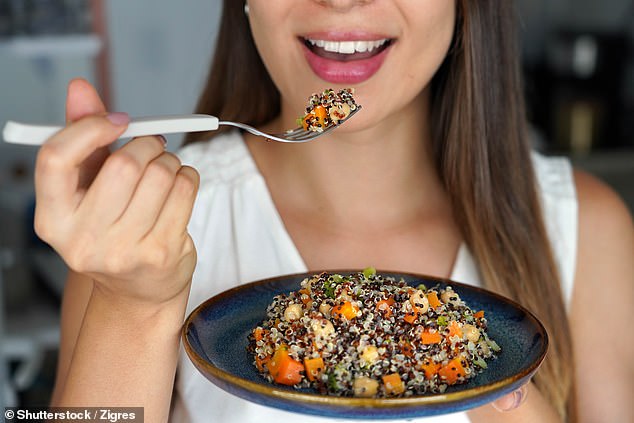
Professor Tim Key, a study co-author and expert in diet and cancer, said: 'Dietary patterns that prioritise fruit, vegetables and fibre-containing foods, and avoid processed meat, are recommended to reduce cancer risk.
'Our study helps to shed light on both the benefits and risks associated with vegetarian diets.'
The analysis pooled data from earlier studies published between 1980 and 2010, covering more than 1.8 million people across the UK, US, Taiwan and India.
Participants were followed for an average of 16 years, during which time there were 220,387 cancer cases – most commonly breast cancer, followed by prostate and colorectal cancer.
While bowel cancer rates have fallen among older adults – largely due to screening – cases are rising at worrying speed among younger, otherwise healthy people, alarming experts.
Ultra-processed foods have long been suspected of driving the trend, with additives and preservatives stripping foods of gut-protective fibre.
Processed meat has come under particular scrutiny because it contains nitrites, which help keep bacon pink and extend shelf life. When cooked, these can form nitrosamines – compounds known to cause cancer.
Cancer Research UK estimates that around 5,400 bowel cancer cases a year are caused by eating processed meat.
Yet the study found vegan diets – typically lower in saturated fat and higher in fibre – were linked to the highest risk of colorectal cancer.
Publishing their findings in the British Journal of Cancer, the researchers said the results came as a surprise.
One possible explanation is that meat-eaters in the study consumed far less meat than average. Adults in the UK typically eat around 34g of meat a day – roughly the size of a standard meatball – but participants in the study ate less than half that amount.
The team also suggested the higher bowel cancer risk seen in vegans may be linked to low calcium intake, a known risk factor.
Across all groups, vegans consumed the least calcium, despite having the highest fibre intake and lowest alcohol consumption – both factors thought to protect against bowel cancer.
Prof Key said: 'At face value, our findings may look contradictory, but they are not incompatible with the established link between processed meat and bowel cancer.
'Most of the meat-eaters we studied were relatively health-conscious. If we had included more heavy processed-meat consumers, results may have been different.'
Vegetarians were also found to have a higher risk of squamous cell carcinoma of the oesophagus, one of the two main types of oesophageal cancer.
Around 9,000 people are diagnosed with the disease each year in the UK, though rates are far higher in parts of Asia.
Researchers suggested restricted diets and low intakes of animal protein and micronutrients such as riboflavin and zinc may play a role.
For other cancers, vegetarian diets appeared protective.
Men who avoided meat had a 12 per cent lower risk of prostate cancer. Other studies suggest plant-based diets may slow disease progression and reduce side-effects such as urinary incontinence and erectile dysfunction.
Vegetarians and pescatarians were also more than 25 per cent less likely to develop kidney cancer – possibly because high animal-protein intake raises levels of a biomarker linked to kidney damage, though more research is needed.
Blood cancer risk was also lower, which researchers linked to healthier body weight, with obesity a major risk factor.
Prof Key concluded: 'Overall, the picture for vegetarians is quite optimistic.
'But, like everyone else, vegetarians should ensure they replace missing nutrients through supplements or fortified foods.'
The authors stressed the study was observational and cannot prove cause and effect. They also warned vegetarian diets vary widely and are defined by what people avoid, not what they eat.
Professor Tom Sanders, a nutrition expert at King's College London who was not involved in the study, called the findings 'important' but urged caution, noting the meat-eaters studied did not consume large amounts of meat.
Professor Jules Griffin of the University of Aberdeen added that comparisons with NHS Eatwell guidelines were missing, which may represent the optimal cancer-protective diet.
Cancer remains a leading cause of death worldwide, responsible for nearly one in six deaths.
Global data from 42 countries shows colon cancer is the only cancer rising exclusively among under-50s, leaving doctors scrambling for answers.
Read more
Post a Comment for "Vegetarian and vegan diets raise bowel cancer risk, alarming new study finds"