
Japan's effort to shield itself from President Donald Trump's tariffs is facing a new backlash, with environmental groups warning that US projects tied to Tokyo's investment pledge could generate greenhouse gases equal to around 20 per cent of Japan's annual emissions.
The Japanese government agreed to invest 5.7 trillion yen (US$35.6 billion) in the three projects as part of the first round of spending on US infrastructure in return for Trump's tariffs being suspended. In total, the bilateral trade deal is worth US$550 billion.
Japan agreed to the broader package in July last year after Trump had threatened 25 per cent tariffs on Japanese goods, with the deal lowering the rate to 15 per cent.
Do you have questions about the biggest topics and trends from around the world? Get the answers with SCMP Knowledge, our new platform of curated content with explainers, FAQs, analyses and infographics brought to you by our award-winning team.
The three projects are a large gas-fired power plant in Ohio, a crude oil export facility in Texas and a plant manufacturing synthetic diamonds in Georgia.
A coalition of 29 environmental organisations from Japan, the US and other countries criticised the projects and urged Tokyo to stop using public money to support fossil fuel development, with an Asahi newspaper report published on April 11 estimating the three projects' emissions at about 20 per cent of Japan's annual total.
The planned Ohio thermal plant would be the largest of its kind in the world and could generate 9.2 gigawatts of electricity. Toshiba and SoftBank Group are among the Japanese companies expected to be involved in the development.
It would, however, emit 15.5 million tonnes of CO2 annually when it is operational, the Asahi reported, equivalent to the entire annual emissions of Nepal.
Shipping giant Mitsui OSK Lines and Nippon Steel are reportedly bidding to provide equipment to the Texas oil terminal, which is projected to export as much as US$30 billion in energy a year.
That amount of oil would emit as much as 200 million tonnes of greenhouse gases when consumed at its final destination, equivalent to 0.5 per cent of the world's CO2 emissions for one year.
Hiroki Osada, a campaigner with Friends of the Earth Japan, said there are multiple reasons why the Japanese government should not use public finance to fund the development of fossil fuel infrastructure.
The groups that signed the statement "cannot agree with new financing for fossil fuel projects", Osada said, as it "runs counter to the essential global objective of transitioning away from fossil fuels, which is indispensable to avoiding the climate crisis."
And while it is claimed that LNG is "cleaner" than coal as an energy source, Osada said there is extensive new research showing that there are typically large leaks of harmful methane throughout the supply chain that undermine that suggestion.
"Priority is being placed on LNG, but we are saying that LNG is bad for the climate and we should be removing it from the supply chain," he said.
Yasuko Suzuki, a campaigner with Kiko Network, another signatory to the petition to the Japanese government, agreed that LNG is not the solution to the climate crisis.
"The government sees LNG as a 'transition energy' that is better than coal and is important to preserve Japan's energy security," she said. "We oppose that position and we are also against the Ohio and Texas projects.
"We do not want native residents and local people in these areas to be hurt or have their health damaged by energy that is to be sent to Japan when it is not necessary," she said. "We need to do more to increase the use of renewable energy sources, both here and in the US."
Campaigners against the investment said the project would clearly breach the G7 nations' commitment to limit temperature rises, and pointed to the "documented environmental and health harms linked to existing LNG projects supported by Japanese public finance".
They added that using funding for fossil fuel infrastructure as "a bargaining chip in tariff negotiations" could not be considered a responsible use of public finance.
The Japanese government has made no formal response to the statement, but a political analyst said it could offer Prime Minister Sanae Takaichi a "get-out" clause to the investment agreement struck with the Trump administration.
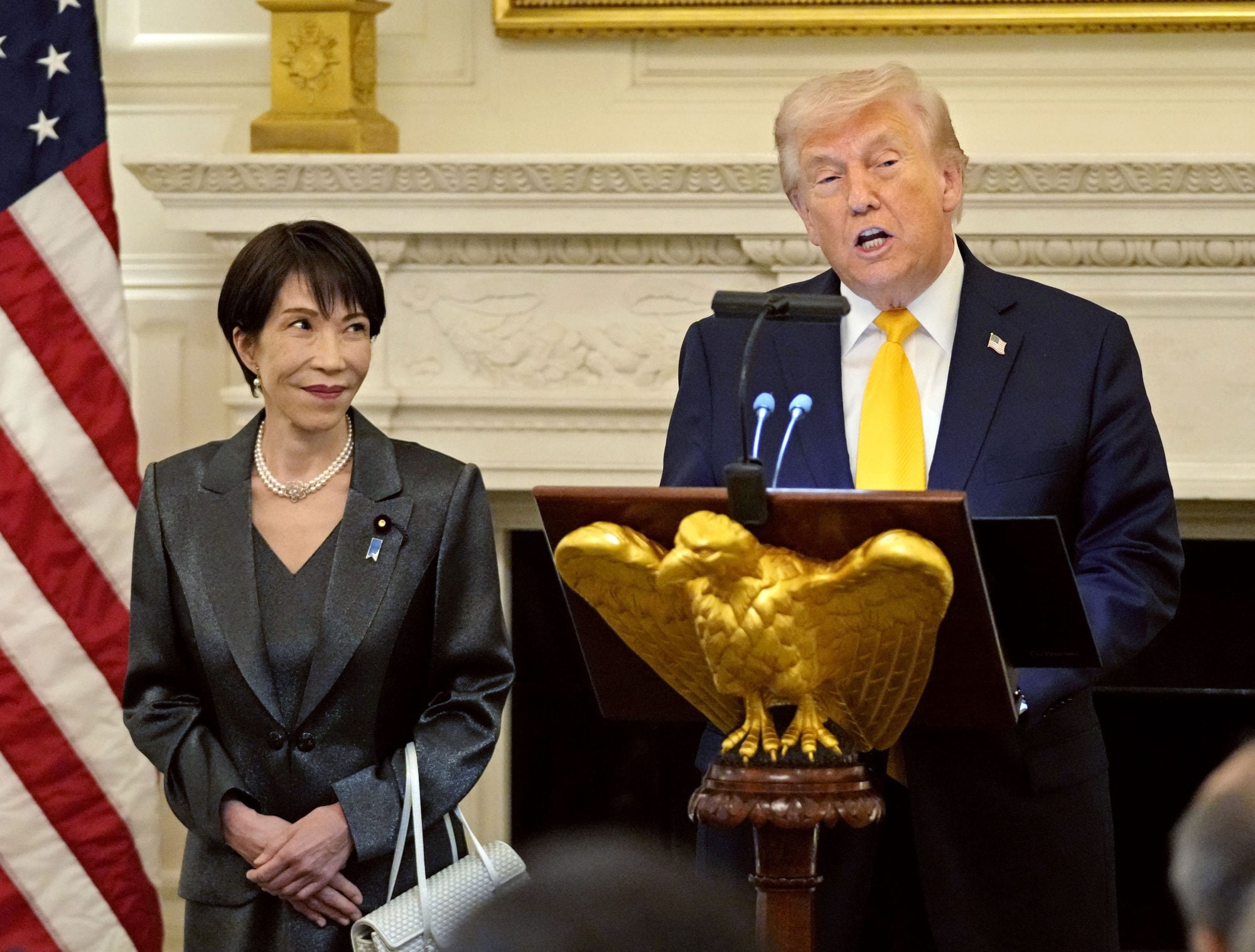
"The opposition could use this statement and information in deliberations in the House of Councillors, where they still have a majority and can continue to block legislation," said Michael Cucek, a professor of Asian Studies at the Tokyo campus of Temple University.
"Everyone in Japan hates how they are effectively being extorted by the US, so this could provide a new way to handle that," he suggested. The best approach would be to try to "embarrass" the government with the evidence of sharply increased emissions linked to the projects that Tokyo is funding.
"This could be a convenient excuse for the government to say that it needs to re-examine the deal, and while that would tick off Trump immensely, he has other issues to deal with right now, so I do not think the response would be so bad."
Trump was mollified when Takaichi explained that the constitution would not permit Japan to commit any military personnel to the conflict in the Gulf, Cucek pointed out, and she could use a similar rationale if she wanted to withdraw from the investment that has been promised to the US, particularly if the administration that replaces Trump reverses course on the projects because of the environmental challenges they pose.
"The government may be willing to use convenient excuses to delay demands from the US," he said. "Japan wants to delay, delay, delay and get out of this agreement."
More Articles from SCMP
Brazil fires slave labour watchdog chief after BYD blacklisting
Could Trump’s Hormuz blockade derail China summit with Xi Jinping?
‘AI for all’ efforts must not leave any Hongkonger behind
Shenzhen’s new party boss has taken the wheel but can he deliver ahead of Apec?
This article originally appeared on the South China Morning Post (www.scmp.com), the leading news media reporting on China and Asia.
Copyright (c) 2026. South China Morning Post Publishers Ltd. All rights reserved.
Post a Comment for "Japan’s bid to avert Trump tariffs draws fire over climate impact of US projects"