
A&Es across England are 'under siege' from patients with hiccups, sniffles and ingrowing toenails, health chiefs have warned.
The NHS said more than 200,000 A&E cases last winter could have been dealt with elsewhere.
Emergency departments also dealt with more than 6,300 cases of blocked noses, almost 400 people with hiccups and over 3,800 cases of ingrown toenails between November 2024 and March 2025.
Health leaders have already warned that 999 calls and A&E demand fuelled by soaring flu cases have already risen to levels normally only seen on New Year's Eve.
According to the latest NHS England monthly A&E performance data, emergency departments and ambulance services also faced their busiest October yet.
But they face even further pressure later this month as resident doctors plan to strike for five consecutive days amid a row over pay and conditions.
Thousands of medics — previously known as junior doctors — will walk out for the 14th time in three years, from December 17 until December 22.
Health secretary Wes Streeting, said: 'This winter will be one of the busiest ever for our hard-working NHS staff dealing with soaring flu cases and tough pressures across A&Es up and down the country.
'That will be made even harder by the BMA's dangerously reckless decision to strike in the run-up to Christmas, causing real anxiety for patients and their families at such an important time of the year.
'We are doing all we can to make sure patients are kept safe and get the right care during this time of intense pressure.
'We can all do our bit this winter by making sure we only use A&E in for genuine accidents and emergencies.'
According to the NHS data, emergency departments in England dealt with 8,669 cases of itchy skin, 384 people with hiccups, and 96,998 patients with sore throats.
Staff also saw more than 6,382 cases of blocked noses, 83,705 earaches, and 3,890 cases of ingrowing toenails.
Officials said too many people were turning to hospitals with problems that could easily be treated elsewhere such as GP surgeries and pharmacies.
But research has long shown that one of the factors driving unnecessary A&E visits is difficulty accessing GP services.
Latest figures suggest more than a fifth of patients cannot get through to their GP on the day they try.
Mr Streeting has vowed to make it easier to get appointments, with all practices now obliged to offer online booking.
Ian Higginson, president of the Royal College of Emergency Medicine, also argued that people turning up at A&E when they could have been dealt with elsewhere 'aren't the problem'.
This is because they may have been told to go to A&E by 111 or fallen sick in the evening or weekends when other services are reduced, he said.
Speaking to Times Radio, he added: 'The problem is that there aren't enough beds in our hospitals and what that means is that when you need a bed we can't get you into one so you're stuck in our corridors and that affects the sickest patients we have.
'We also know that there are loads and loads of patients in our hospital beds who don't need to be there.
'But they can't go home either because the services aren't there to support them at home or because they can't get into residential facilities like care homes or nursing homes to help them recover.
'And these problems have been absolutely in plain sight for years and years and yet our politicians have failed to act on it.'
According to latest NHS monthly performance data, over 54,000 people who attended England's emergency departments in October waited at least 12 hours to be admitted, transferred or discharged.
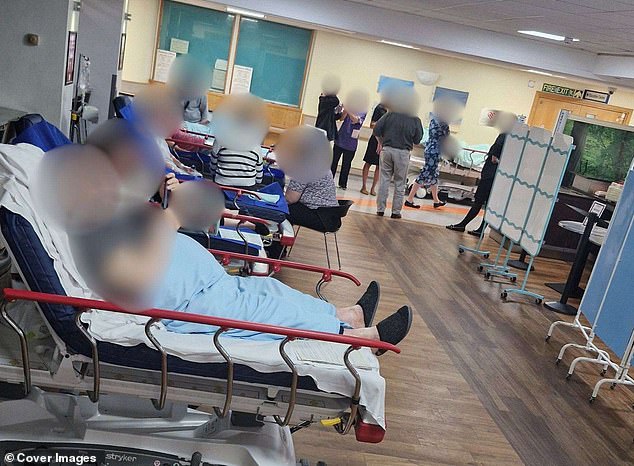
Under three quarters of emergency department attendees (74.1 per cent) were seen within four hours in October.
The Government and NHS England have set a target of March 2026 for 78 per cent of patients attending A&E to be admitted, discharged or transferred within four hours.
Earlier this week, a damning investigation also found that a record number of patients face 'degrading' 12-hour trolley waits in A&E this year.
Analysis of NHS England figures, by the Liberal Democrats, also showed that 23 NHS trusts have seen increases of 12-hour A&E waits in excess of 100,000 per cent since 2016.
Read more- Has the NHS hit its worst flu season in a decade, with 14,000 deaths linked to perilous A&E wait times?
- Struggling NHS: Can government reforms tackle the growing A&E crisis amidst a flu and cold weather nightmare?
- Is Britain's healthcare system collapsing under a relentless wave of flu infections and overwhelmed A&E departments?
- Is Britain's NHS bracing for an unprecedented winter crisis with skyrocketing A&E demands and diminished response times?
- Is Britain's NHS on the brink of collapse with record-breaking 12-hour A&E delays surging to an eye-watering 172,515 waits in one month?
Post a Comment for "A&E's 'under siege' from patients arriving with HICCUPS, blocked noses and ingrown toenails"