
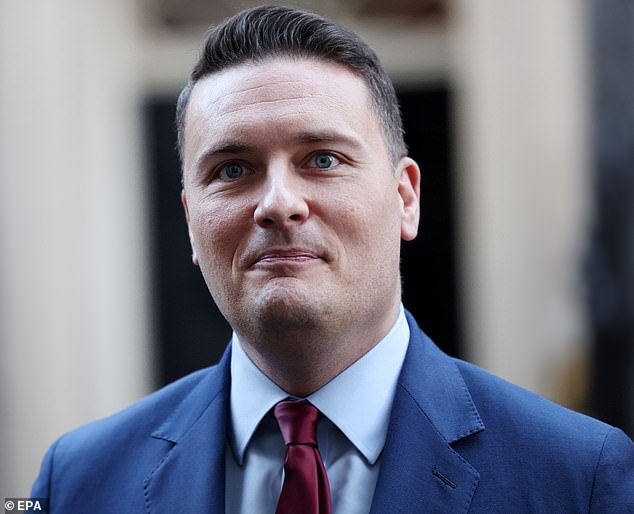
Wes Streeting has ordered an independent review into soaring demand for mental health, ADHD and autism services after warning of an 'overdiagnosis' of conditions.
The Health Secretary said the issue needed to be looked at through a 'strictly clinical lens' as he and fellow ministers look to tackle Britain's ballooning welfare bill.
The review will look at rates of diagnosis, the support offered to people, and inequalities in accessing services.
Earlier this year, the Institute for Fiscal Studies think tank found mental health conditions are being more commonly reported among the working-age population.
More than half of the rise in 16 to 64-year-olds claiming disability benefits since the Covid pandemic is down to more claims relating to mental health or behavioural conditions, their analysis found.
Some 1.3 million people claim disability benefits primarily for mental health or behavioural conditions, which represents 44 per cent of all claimants, it also showed.
In March, Mr Streeting said there was an 'overdiagnosis' of mental health conditions with 'too many people being written off'.
He added the welfare system had to be 'sustainable' but also warned there were 'too many people who just aren't getting the support they need'.
Former prime minister Sir Tony Blair has previously warned against over-medicalising the 'ups and downs' of life.
'Life has its ups and downs and everybody experiences those,' the ex-premier said.
'And you've got to be careful of encouraging people to think they've got some sort of condition other than simply confronting the challenges of life.'
Lord Darzi's 2024 report into the NHS found that demand for mental health, ADHD and autism services has risen, and said many people who are autistic or have ADHD are struggling to access services.
In 1993, 15.5 per cent of 16 to 64-year-olds had a common mental health condition, compared with 22.6 per cent in 2023-24.
Meanwhile, 13 times more people were waiting for an autism assessment in September 2025 compared with April 2019, the Department of Health said.
It said the review comes as £688million in extra funding is going towards hiring 8,500 more mental health workers, expanding NHS talking therapies and increasing the number of mental health emergency departments.
Mr Streeting said: 'I know from personal experience how devastating it can be for people who face poor mental health, have ADHD or autism and can't get a diagnosis or the right support.
'I also know, from speaking to clinicians, how the diagnosis of these conditions is sharply rising.
'We must look at this through a strictly clinical lens to get an evidence-based understanding of what we know, what we don't know, and what these patterns tell us about our mental health system, autism and ADHD services.
'That's the only way we can ensure everyone gets timely access to accurate diagnosis and effective support.'
The review is expected to look at why people are increasingly turning to the NHS and other services for support, the role of diagnosis in accessing help, and how effective current ways of tackling the problems are.
It will be led by Professor Peter Fonagy, national clinical adviser on children and young people's mental health, with input from academics, doctors, epidemiological experts, charities and patients.
The findings will be published next summer. Prof Fonagy said: 'This review will only be worthwhile if it is built on solid ground.
'We will examine the evidence with care – from research, from people with lived experience, and from clinicians working at the front line of mental health, autism and ADHD services – to understand, in a grounded way, what is driving rising demand.
'My aim is to test assumptions rigorously and listen closely to those most affected, so that our recommendations are both honest and genuinely useful.
'We owe it to children and families, young people and adults to provide Government with advice that is proportionate, evidence-based and capable of improving people's lives.'
Tory MP Stuart Andrew, the shadow health secretary, said: 'Anyone being honest can see that the current system is stretched beyond what it can safely sustain.
'A proper, clinical assessment of what is driving the rise is the right thing to do.
'Since the election there are already 225,000 more PIP claimants, with more than 100,000 new awards for psychiatric disorders. Without clear criteria and proper safeguards, demand will continue to outstrip capacity.
'This review must confront that honestly.'
Mark Rowland, chief executive of the Mental Health Foundation, welcomed the review, adding: 'This is a key moment to understand how the social, economic and technological changes of the last decade have affected people's mental health and how we best respond.'
Dr Sarah Hughes, chief executive of Mind, said: 'This is a huge opportunity to really understand what is driving increasing levels of mental illness, especially among our young people.
'More people need help than services can see, people's mental health deteriorates while they wait, and when people do get access to support it is not always appropriate to their needs.
'We also need to be tackling the social and economic factors that are helping to drive increased demand.'
Andy Bell, chief executive of the Centre for Mental Health, said there had been a 'clearly rising trend in mental health needs for both adults and children in recent years'.
He said there was no single cause, but social media, the cost of living and school pressures had contributed and to suggest overdiagnosis was a 'toxic narrative'.
He said: 'I have seen no evidence whatsoever that either mental health problems or neurodiversity are being overdiagnosed. The likelihood is this is a real increase in mental distress.'
Earlier this year, Sir Keir Starmer was forced to abandon plans to reform disability benefits, including for those with mental health conditions, in the face of a revolt by Labour MPs.
But the Prime Minister on Monday signalled he will make a fresh push on welfare reform, claiming the system is 'trapping people, not just in poverty, but out of work'.
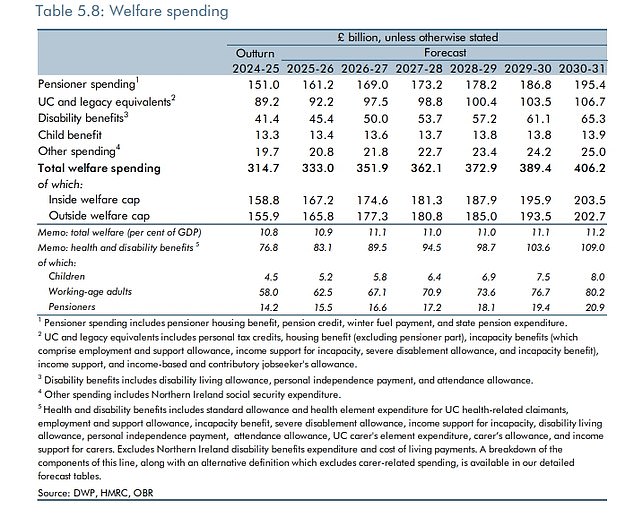
At her Budget last week, Chancellor Rachel Reeves increased welfare spending by £16billion a year, including the cost of dropping this year's planned reforms, and the £3.2billion bill for scrapping the two-child benefit cap.
Total welfare spending, including benefits and pensions, is now forecast to rise from £333billion to £406billion by the end of the decade.
Read more- Is Labour's Wes Streeting right in saying mental health conditions are being 'overdiagnosed'? Dive into the startling admissions impacting Britain's ballooning benefits bill!
- How will Sir Keir Starmer's blockbuster welfare overhaul tackle the explosive 41,000% rise in ADHD claims?
- How does Labour plan to address the skyrocketing cost of handling ADHD in the UK's welfare budget?
- Is the UK's largest disability benefit becoming a billion-pound burden amid allegations of mental health welfare exploitation?
- Could Labour's welfare reforms trigger a crisis as mental health charities report surge in desperate calls?
Post a Comment for "Wes Streeting orders review into soaring demand for mental health, ADHD and autism services"