
An NHS trust in Kent waited two days before raising the alarm about the meningitis outbreak, it has been reported.
The Queen Elizabeth the Queen Mother Hospital in Margate first reported a case to the UK Health Security Agency (UKHSA) on the afternoon of Friday, March 13.
A patient had arrived in hospital two days earlier, but the East Kent Hospitals NHS Trust waited until a formal diagnosis was confirmed before raising the alarm, BBC News reported.
Doctors have a legal duty to report cases of the disease to the UKHSA as soon as they are suspected.
Two students have died in the outbreak, including 18-year-old Juliette Kenny, who was described by her family as ‘fit, healthy and strong’ before her death, and a University of Kent student.
The latest figures show the number of cases has fallen this week as more testing revealed some people were wrongly told they were infected.
On Monday, 20 cases of meningitis had been confirmed, with a further three under investigation, bringing the total to 23.
This was down from 29 on Sunday, when 20 cases were confirmed and a further nine were under investigation.
Dr Des Holden, acting chief executive of East Kent Hospitals NHS Trust, said officials could have acted sooner.

He said: 'We recognise there was an opportunity prior to diagnosis to notify UKHSA.
'We cannot go into the detail of individual patients' care, but the trust has been in close contact with UKHSA since Friday 13 March to discuss the management of patients presenting with suspected meningitis.'
The UKHSA said that an earlier report could have led to an investigation starting sooner and provided antibiotics to close contacts of the patient to prevent them from developing invasive meningitis.
It said the peak of the outbreak was on March 13, the day when the alarm was first raised.
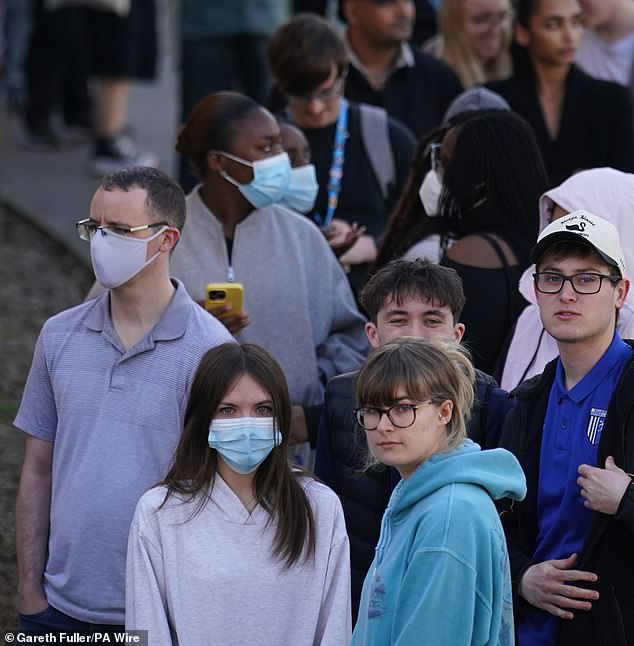
Officials started vaccinating University of Kent students on Wednesday, March 18.
The following day, on a visit to the campus, Health Secretary Wes Streeting said the programme would be expanded to more people, including sixth form pupils at four schools with known or suspected cases of menB.
This week, Ministers also agreed to offer jabs to Year 11 pupils at those schools, which they said was a precautionary measure to ensure longer-term protection against the disease.
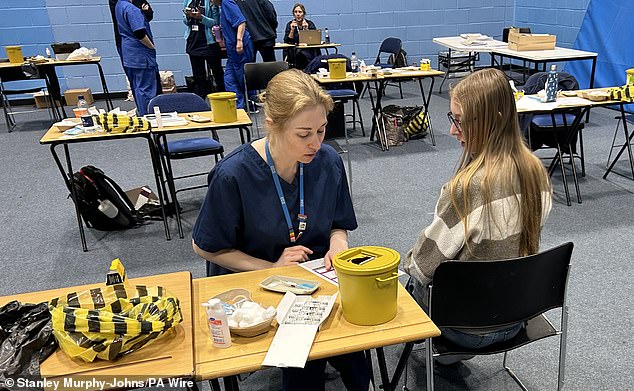
NHS Kent and Medway said that by 11am on March 24, 13,386 doses of antibiotics were given out - along with 10,627 vaccines.
All patients in the Kent outbreak have required hospital admission. Nine were admitted to the intensive care unit, where four remain.
Health Secretary West Streeting said the delay was 'not good enough'.
Speaking to the Today programme on BBC Radio 4, he said: 'I can reassure you about two things. In that case, the individual presented on Wednesday evening unwell.
'By mid-morning on Thursday, the trust suspected meningitis. They had 24 hours to notify the UKHSA, they took 26 hours.
'I can tell you that that delay did not have a material impact in terms of containing the disease, but it is also not good enough, and we have that 24 hours for a reason
'There was rapid improvement in terms of the protocols and the trust adhering to them at the time.
'But there will still be a further accountability conversation for the trust to have with the UKHSA and with me.'
Juliette Kenny died on the morning of March 14, just one day after medics finally raised the alarm about the outbreak.
East Kent Hospitals NHS Trust then supposedly took several hours to notify health officials of Juliette's death, only informing the UK Health and Security Agency (UKHSA) later that evening, The Telegraph reported.
The year 13 student at Queen Elizabeth's Grammar School in Faversham had been 'fit, healthy and strong' before her death and had completed the practical assessment for her PE A-level on Thursday, March 12.
Her father Michael Kenny first became aware that his daughter was ill when she vomited in the early hours of Friday, March 13.
'In the morning on Friday, she was taken, by us, to our local emergency drop-in as a discolouration appeared on her cheeks,' Mr Kenny said.
The teen was not showing any other symptoms at the time and was given antibiotics before being taken to A&E in an ambulance.
'Juliette fought bravely for hours, but despite the fantastic NHS hospital staff fighting alongside her, meningitis took her from us less than 12 hours later,' Mr Kenny added.
'We were with her at the end, and the last sounds that she heard were the voices of those who loved her telling her how very much loved and cherished she is.'
Mr Kenny added: 'The devastation of her loss to us, her family and friends is immeasurable.'
On the same day an unnamed, female, 21-year-old student at the University of Kent also died at one of the Trust's hospitals, raising questions as to why NHS bosses did not act sooner.
But the UKHSA itself waited until Sunday to announce that it would be arranging antibiotics for some students following an outbreak in the area.
While Health Secretary Wes Streeting has defended the agency's response, health experts and MPs have been critical.
The UKHSA previously said the outbreak was caused by a new variant with significant mutations which are likely to have impacted how fast the disease spread.
The group B meningococci is closely related to a variant that has been in the UK for around five years but has some potentially alarming differences.
In a technical document published on Tuesday, the UKHSA admitted it is a ‘realistic possibility’ that the new strain is the ‘main driver’ of the outbreak.
Experts found the genome of the bacteria has ‘multiple potentially significant genetic differences when compared to the most closely related genomes’.
These are now being evaluated to help officials understand how they may change its behaviour.
The laboratory analysis offered ‘strong reassurance’ that the antibiotics and MenB vaccine being offered to at-risk groups will be effective against the strain.
It comes as a survey today found that just one in four patients is satisfied with the NHS.
Ratings increased from a record low of 21 per cent in 2024 to 26 per cent last year, according to an annual 'gold standard' survey, which has tracked attitudes since 1983.
More than half of the public (51 per cent) remain 'very' or 'quite' dissatisfied with the service, according to analysis of the figures by the King's Fund and the Nuffield Trust health think tanks.
The UKHSA has been contacted for comment.
Read more
Post a Comment for "NHS trust 'failed to raise alarm over Kent meningitis outbreak at earliest opportunity', boss admits"